
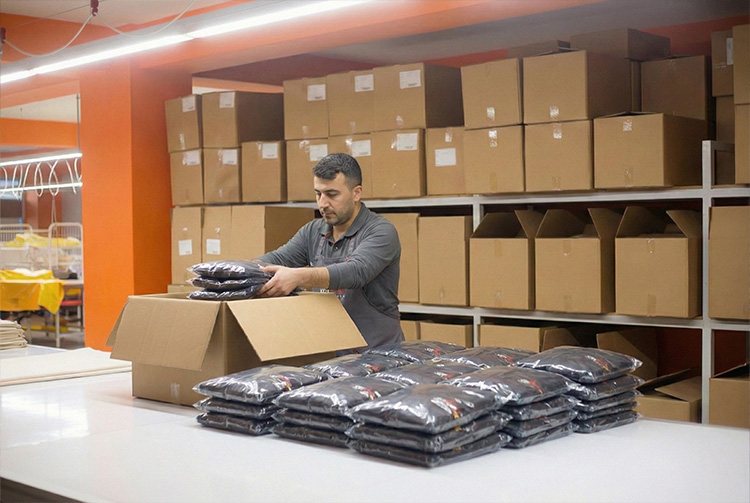
Streetwear is no longer just about being cool. It’s about durability, ethical production, fabric innovation, and sustainability. These expectations have reshaped global sourcing decisions, pushing brands to look beyond trend-setting capitals and into advanced manufacturing hubs. Turkey stands out as one of the most capable and competitive players in this landscape, with companies like FK Tekstil forming the backbone of a new-generation production ecosystem.
Below, we break down how Turkey’s commitment to quality and compliance is influencing the global streetwear market and why international brands increasingly choose Turkey as a strategic manufacturing partner.
1. Turkey as a Global Textiles & Apparel Powerhouse
Turkey’s textile and ready-to-wear industry has evolved far beyond the cheap labor narrative. Over the last decade, the sector shifted its center of gravity from basic commodity products to higher value-added, design-driven, and technologically enhanced garments.
- Turkey ranks among the top 6 apparel exporters globally.
- It is the 3rd largest supplier to the European Union.
- Its textiles ecosystem combines deep industrial heritage, skilled labor, advanced machinery, and fast logistics.
For streetwear brands, which rely on sharp drops, agile replenishment, and trend-sensitive releases, this ecosystem creates a unique competitive edge.
2. Quality Framework: National Standards + Global Certifications
Turkey’s quality ecosystem operates on two structural pillars: national standardization and international certification.
2.1 National Standardization (TSE)
The Turkish Standards Institution (TSE) governs testing, benchmarking, and regulatory compliance across the textile supply chain, ensuring traceability and validated quality.
This creates consistency across:
- fabric performance
- chemical compliance
- washing durability
- shrinkage control
- fit repeatability
Streetwear products such as heavy-weight hoodies, oversize tees, cargos, and denim benefit significantly from this alignment.
2.2 International Certifications
Modern streetwear consumers care about responsibility as much as aesthetics. Turkish manufacturers respond with widely recognized standards:
- ISO 9001 (Quality Management)
- OEKO-TEX® Standard 100 (Chemical safety)
- GOTS – Global Organic Textile Standard
- OCS / RCS / GRS (Organic & recycled content verification)
- BSCI / Sedex (Social compliance & ethical production)
For FK Tekstil, these certifications serve as trust signals, particularly for European, UK, and US brands adopting sustainability KPIs and ESG-linked procurement strategies.
3. Streetwear-Specific Quality Parameters
Streetwear has its own engineering language. It values structure, handfeel, silhouette, and longevity.
3.1 Fabric & Material Selection
Turkey is exceptionally strong in cotton and cotton-blends — the bedrock of streetwear.
Key categories include:
- Heavy fleece & French Terry (hoodies, joggers)
- Organic cotton jerseys (oversize tees)
- Denim & twill (cargos & outerwear)
- Elastane-supported comfort blends
- Recycled or low-impact materials
Organic & recycled content standards (GOTS / GRS / RCS) integrate into collection development seamlessly — aligning production with Gen Z and Gen Alpha sustainability expectations.
3.2 Fit, Pattern, and Grading Consistency
Oversize silhouettes require precision. A garment can be boxy without being sloppy, but only with proper grading.
Turkey delivers consistencies in:
- EU / UK / US size charts
- multi-market grading
- iterative sampling & digital fit approvals
- shrinkage-adjusted patterning
For global streetwear brands, consistency across London, Berlin, New York, and Tokyo retail is mission-critical.
3.3 Low MOQ + Fast Response Capability
The drop era killed the “bulk + long lead time” model. Turkish producers adapt with:
- low MOQ onboarding (50–150 pcs per color/fit)
- rapid sampling timelines
- fast re-order mechanisms
- capsule & micro-collection flexibility
This is especially valuable for emerging streetwear labels and digitally-native brands testing market traction.
4. Sustainability & Ethical Compliance: The New Standard
Streetwear consumers, especially under 30, demand transparency. Turkey’s adoption of organic, recycled, and responsibly sourced materials offers structural advantages:
- Organic cotton & OEKO-TEX® compliance
- Better Cotton Initiative (BCI) partnerships
- BSCI / Sedex audits for labor & ethics
- traceability documentation for supply chains
Sustainability is no longer a premium upsell — it’s a table stake in the global market.
5. How Turkey Influences the Global Streetwear Market
5.1 Lead Time Advantage for EU + UK
Geography matters. Compared to Far East production, Turkey offers:
- short transit times
- flexible replenishment
- “See Now Buy Now” fulfillment ability
- just-in-time drops
Urban fashion thrives on speed — Turkey delivers speed without compromising quality.
5.2 Competitive Price–Quality Ratio
Turkey sits in a strategic midpoint:
- higher quality & lower defect rates than low-cost Asian suppliers
- more competitive pricing than Western and Mediterranean manufacturers
- stronger compliance & certification frameworks than many developing suppliers
This balance has made Turkey a favorite sourcing destination for premium and mid-premium streetwear segments.
5.3 Design, R&D, and Technical Know-How
Turkish factories no longer just stitch — they co-engineer.
Capabilities now include:
- pigment, puff & rubber print techniques
- enzyme & stone washes
- garment dye treatments
- denim finishing & distressing
- hybrid performance fabrics
This allows FK Tekstil to act not only as a manufacturer, but a collection development partner.
6. FK Tekstil’s Positioning in This Landscape
For FK Tekstil, the opportunity is clear:
- “Made in Turkey” as a quality + compliance stamp
- low MOQ + fast sampling for new or scaling brands
- certification-led trust signaling
- trend-aligned production for hoodies, tees, cargos & outerwear
- sustainable sourcing for future-proof brands
Instead of merely producing garments, FK Tekstil can position itself as a strategic streetwear manufacturing partner for Europe, the UK, and North America.
7. Conclusion: The Future of Streetwear is Responsible, Agile, and Technical
The global streetwear market continues to expand, but the rules are changing. Brands must deliver:
- durable construction
- ethical production
- sustainable materials
- trend responsiveness
- consistent fit and finish
Turkey’s production ecosystem checks all of these boxes, making it one of the most valuable and future-ready manufacturing hubs for streetwear. As the category matures, companies like FK Tekstil have a unique opportunity: to shape the next era of streetwear not only through style, but through quality, sustainability, and intelligent production systems.