
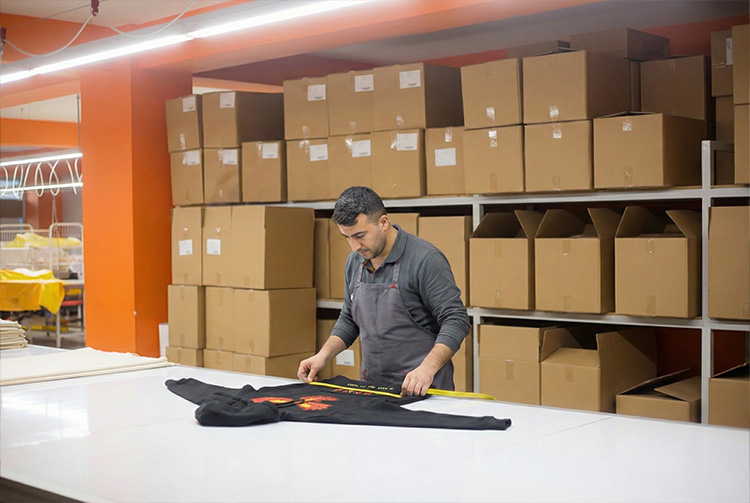
Turkey’s strength in streetwear production starts at the stitching line and in the quality control room. Modern streetwear buyers expect clean seams, long-lasting fabrics, ethically run factories, and transparent quality processes. These expectations have moved brands away from purely price-driven sourcing and towards production partners that can combine speed, reliability, and technical know-how. Turkey stands out in this shift, with manufacturers like FK Tekstil building end-to-end systems around precise stitching and robust quality control.
In this article, we look at how Turkey’s streetwear manufacturers structure stitching, construction, and quality assurance, and why that makes the country a strategic choice for brands that want fewer defects, better fits, and repeatable results drop after drop.
1. Why Turkey Excels in Streetwear Stitching & Quality Control
Turkey’s apparel industry has evolved into a vertically integrated system where cutting, stitching, finishing, and inspection run in sync. Instead of focusing only on mass volume, factories have invested in skilled operators, automated machines, and documented sewing standards tailored to streetwear silhouettes like hoodies, cargos, and oversize tees.
- Experienced sewing operators familiar with complex streetwear constructions.
- Modern stitching machinery that supports consistency at scale.
- Quality teams trained around international streetwear brand requirements.
For streetwear labels that live on repeat orders and fit loyalty, this combination of skilled stitching and controlled processes turns Turkey into a reliable base for long-term production partnerships.
2. Quality Framework: Stitching Standards, National Rules & Global Certifications
Turkey’s quality ecosystem rests on three pillars: clear stitching and workmanship standards, national regulation, and alignment with global certification schemes.
2.1 National Standardization (TSE) Supporting Streetwear
The Turkish Standards Institution (TSE) defines testing and minimum performance levels across textiles and apparel. For streetwear, this means that the fabrics, seams, and finishes used in production can be validated and traced through the supply chain.
This consistency covers areas such as:
- fabric strength and dimensional stability
- chemical and dye compliance
- washing and abrasion resistance
- controlled shrinkage after laundering
- repeatability of patterns, fits, and grading
When heavy fleece hoodies or washed cargos are made under these rules, brands gain confidence that their garments will age predictably in real-world wear.
2.2 International Certifications as Quality Signals
Quality today is not only how a garment looks, but how it has been produced. Turkish streetwear manufacturers therefore combine technical standards with internationally recognized certifications.
- ISO 9001 (Quality Management) for documented processes and continual improvement.
- OEKO-TEX® Standard 100 for chemical safety at fabric and trim level.
- GOTS – Global Organic Textile Standard for organic cotton collections.
- OCS / RCS / GRS for verified organic and recycled material content.
- BSCI / Sedex for social compliance and ethical production monitoring.
For FK Tekstil and its partners, these certifications simplify onboarding with European, UK, and North American brands that need audited, traceable, and ESG-compliant production capacity for their streetwear lines.
3. Streetwear-Specific Quality Parameters in Turkish Production
Streetwear behaves differently from classic casualwear. Oversize fits, heavy fabrics, and graphic applications all put pressure on seams, necklines, and rib cuffs. That is why Turkish manufacturers treat streetwear as a technical category with its own engineering checklist.
3.1 Fabric & Material Selection for Clean Stitching
Turkey has deep expertise in cotton and cotton-rich fabrics, which form the backbone of global streetwear collections. Material choice is the first step in smooth stitching and long garment life.
Common streetwear fabric families include:
- heavy fleece & French Terry for structured hoodies and joggers
- compact jersey for oversize tees that keep their shape
- denim & twill bases for cargos, jackets, and utility pieces
- elastane blends for comfort-stretch waists and rib finishes
- recycled, organic, or low-impact yarns for responsible collections
Once the right fabric is locked in, seam types, thread counts, and needle selection are optimized to avoid skipped stitches, seam grin, or early seam failure in high-stress zones.
3.2 Fit, Pattern, and Grading Consistency
In streetwear, the “feel” of a silhouette is a brand asset. A boxy tee or relaxed hoodie needs to drape intentionally, not randomly. That requires precise pattern work and disciplined grading.
Turkish production teams build this through:
- size charts tailored to EU, UK, and US retail expectations
- multi-market grading that respects regional preferences
- iterative sampling rounds with digital and physical fit checks
- patterns adjusted for shrinkage and fabric behaviour
The result is that a hoodie bought in Berlin feels like the same hoodie bought in London or New York, both in fit and in construction quality.
3.3 Low MOQ + Fast Response Backed by Stable Quality
Drops, capsules, and collabs require small initial runs, fast read of performance, and quick replenishment. Turkey’s production model is built to support this without sacrificing quality control.
- low MOQ onboarding starting from 50–150 pieces per color or fit
- rapid sample development to test fits, prints, and stitching details
- fast reorder loops based on proven styles and size curves
- flexible micro-collections that still follow the same QC standards
Emerging streetwear brands gain room to experiment, while knowing that every batch is controlled against the same stitching and defect criteria.
4. Sustainability & Ethical Compliance Built into Quality Control
For today’s streetwear audience, quality also means “clean conscience”. Turkey’s rapid move toward organic, recycled, and responsibly sourced materials connects directly with how many brands now define quality in their collections.
- organic cotton and OEKO-TEX® certified fabrics and accessories
- Better Cotton Initiative (BCI) partnerships in upstream sourcing
- BSCI / Sedex audits for working conditions and ethical compliance
- traceability documentation that can be shared with end customers
These frameworks make it easier to align brand storytelling, hangtag claims, and actual production practice into one coherent, verifiable quality narrative.
5. How Turkey Shapes the Global Streetwear Supply Chain
5.1 Lead Time Advantage for EU & UK Markets
Geography gives Turkey a practical edge. When streetwear is produced near Europe and the UK, brands can react faster to sales data without accepting weaker stitching or rushed quality checks.
- shorter transit times compared with Far East production
- agile replenishment based on real-time demand
- “see now, buy now” drops supported by controlled production
- just-in-time deliveries that still pass full QC
In a category where trends can shift in weeks, this combination of speed and quality is a serious competitive advantage.
5.2 Competitive Price–Quality Ratio
Turkey occupies a strategic middle ground: it is not the cheapest option on earth, but it consistently delivers better stitching, fewer complaints, and stronger compliance than many purely low-cost alternatives.
- lower defect and return rates than many low-cost suppliers
- more competitive pricing than most Western and Mediterranean production
- mature compliance and certification frameworks versus emerging hubs
For premium and mid-premium streetwear, this balance allows brands to protect both margin and reputation over the long term.
5.3 Design, R&D, and Technical Print & Wash Know-How
Turkish manufacturers are no longer simple cut-and-sew providers. They increasingly act as technical partners, bringing ideas and solutions into the development phase.
Typical value-add capabilities include:
- pigment, puff, rubber, and high-density print techniques
- enzyme and stone washes for soft handfeel and vintage looks
- garment dye programs that keep color and stitching performance aligned
- denim finishing and distressing tuned for streetwear aesthetics
- hybrid fabrics that combine comfort, durability, and visual impact
For FK Tekstil, this means playing an active role in collection building, not just executing tech packs, and improving stitch, print, and wash outcomes over time.
6. FK Tekstil’s Role in Turkey’s Streetwear Quality Story
Within this wider ecosystem, FK Tekstil positions itself as a partner focused on stitching reliability, transparent QC, and flexible production structures for streetwear brands.
- using “Made in Turkey” as a signal of structured quality and compliance
- offering low MOQ and fast sampling for new or scaling streetwear labels
- backing every collection with certification-led trust signals
- specialising in hoodies, tees, cargos & outerwear with refined fits
- developing sustainable sourcing options for long-term brand positioning
Instead of simply filling production lines, FK Tekstil aims to help brands design collections that are technically sound, production-ready, and aligned with how global streetwear is evolving.
7. Conclusion: Turkey’s Strength in Streetwear Production is Built on Stitching & Quality Control
The global streetwear market is growing, but the winners are brands that combine aesthetic impact with technical reliability. That requires production partners who can deliver:
- durable stitching and construction in real wear conditions
- ethical, audited factories and transparent supply chains
- responsibly sourced, future-proof materials
- fast, drop-ready lead times without cutting QC corners
- consistent fits and finishes across seasons and markets
Turkey’s streetwear production ecosystem delivers on these points, making it one of the most strategic hubs for brands that care about both image and integrity. Within this landscape, FK Tekstil has the opportunity to stand out as a manufacturing partner that treats stitching, quality control, and sustainability as core design tools, not afterthoughts.