Luxury Streetwear Manufacturing · Istanbul
A production guide for premium and luxury streetwear brands in Germany, the UK, the Netherlands, Poland, Italy and across Europe: what separates luxury streetwear from standard streetwear, which fabrics, construction details and decoration techniques create a premium product, what drives the cost and how to choose the right manufacturer. Written by the FK Textile production team in Istanbul. Updated November 2026.
Luxury streetwear manufacturing is where a good design either becomes a premium product or ends up looking like merch. Two hoodies can share the same graphic and the same oversized silhouette, yet one sells for three times the price. The difference is rarely the idea. It is the fabric, the pattern, the stitching, the print technique, the trims and how consistently all of these survive the step from sample to bulk.
Many young brands position themselves as luxury on day one, but brief their manufacturer like a basics supplier: a colour, a size chart and a target price. This guide breaks luxury streetwear down into concrete production decisions, so you can brief a factory precisely, understand what you are paying for and protect your positioning from the first drop onwards.
Quick Answer: What Is Luxury Streetwear Manufacturing?
The Six Pillars of Luxury Streetwear
When customers call a piece “premium”, they are reacting to a combination of signals. In production, each signal is a decision you can specify in your tech pack:
Standard vs Luxury Streetwear: Where the Difference Shows
Fabrics for Luxury Streetwear
T-shirts
Luxury tees are typically made from 100% combed cotton single jersey between 240 and 300 GSM. The heavier weight gives a boxy drape, while combed or compact yarn keeps the surface smooth for clean prints. Interlock is an option for an even denser, more stable hand feel. Compacting and pre-shrinking are essential so oversized fits stay oversized after washing.
Hoodies and sweatshirts
Hero hoodies usually use 3-thread brushed fleece or heavyweight loopback French terry between 400 and 550 GSM. Loopback is popular in luxury streetwear because it combines structure with breathability and works very well with garment dye. For more detail on weights and fabric types, see our guide to heavyweight streetwear production.
Garment-dyed and washed fabrics
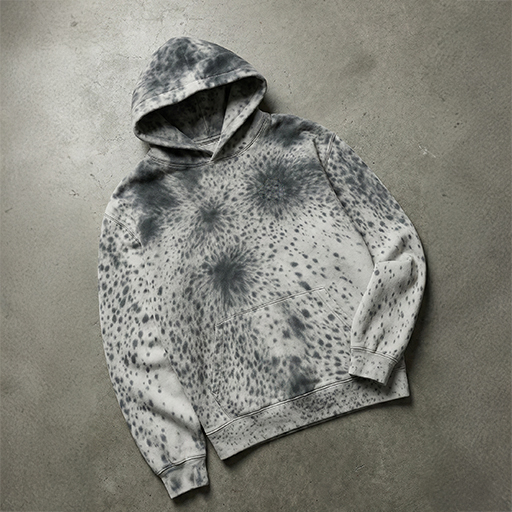
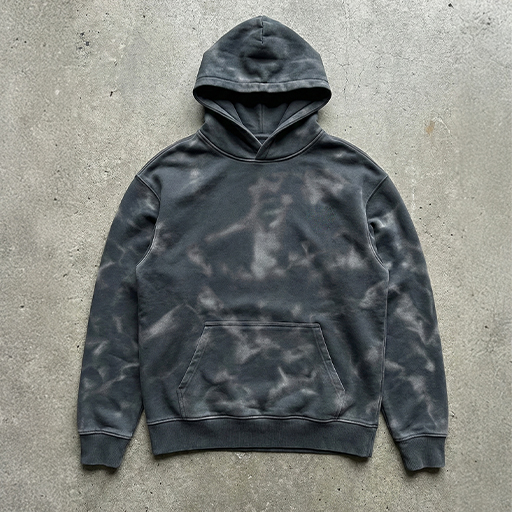
Garment dye, pigment dye, acid wash and enzyme wash give a lived-in, vintage character that many luxury streetwear labels rely on. These processes require 100% cotton or a very high cotton content and a pattern that allows for the additional shrinkage during dyeing.
Never approve luxury on substitute fabric
A sample made on whatever fabric is available can look right and still fail in bulk. Weight, shrinkage, print behaviour and colour all change with the fabric. For luxury streetwear manufacturing, insist on sampling on the intended production fabric, or at least on a fabric with identical composition, weight and finishing.
Construction Details That Signal Quality
Customers may not know the technical names, but they feel these details the moment they pick up the garment:
- Taped neck and shoulder seams: reinforce the neckline and stop shoulders from stretching under the weight of heavy fabric.
- Coverstitch and flatlock seams: flat, durable seams that look clean outside and feel smooth inside.
- Bartacks at stress points: pocket corners, drawcord exits and hem ends stay intact over time.
- Double-layer hood: gives the hood volume and structure, a key luxury signal on hoodies.
- Side panels and rib gussets: improve movement and shape in oversized and boxy fits.
- Clean interior finishing: no loose threads, neatly covered seams, labels attached without irritation.
- Higher stitch density: more stitches per centimetre for stronger, neater seams.
Decoration Techniques for Luxury Streetwear
In luxury streetwear, decoration should add texture and depth, not just colour. The most common techniques are:
Every technique behaves differently on different fabrics. Test the decoration on the production fabric and wash it before approving bulk.
Trims, Labels and Packaging
Trims are small, but they are touched every day and often photographed. In luxury streetwear manufacturing, they should match the weight and quality of the garment:
- Neck labels: custom woven or damask labels, or a printed neck label for a tagless look.
- Brand tabs: woven hem tabs, side-seam flags or rubber patches.
- Drawcords and aglets: thick flat or round drawcords with metal or silicone aglets, ideally branded.
- Care labels: branded, correctly composed and compliant with EU labelling requirements.
- Hang tags and packaging: heavy card tags, custom polybags or boxes that support the unboxing experience.
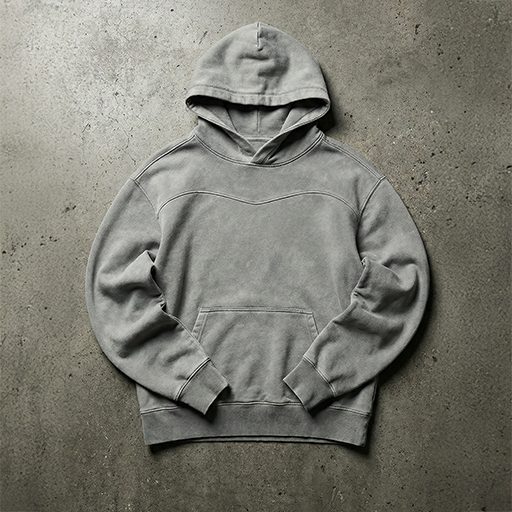
Typical Luxury Streetwear Products and Their Specs
Heavyweight boxy tee
100% combed cotton jersey, 260–300 GSM, pre-shrunk, taped neck, heavy rib collar, puff or discharge print, custom woven neck label.
Premium oversized hoodie
Loopback or 3-thread fleece, 450–550 GSM, double-layer hood, side panels, heavy rib with elastane, metal aglets, chenille or 3D embroidery.
Garment-dyed set
100% cotton hoodie and sweatpants, garment-dyed or acid-washed, pattern adjusted for dye shrinkage, tone-on-tone embroidery.
Limited drop piece
Mixed techniques such as appliqué, distressing and multi-layer print, produced in small, numbered runs to support scarcity.
What Drives the Cost of Luxury Streetwear?
Luxury streetwear costs more to produce than basics, and it is worth knowing where the money goes before asking for a quote:
- Fabric: heavier weights, combed yarn, special colours and garment dye all add cost and lead time.
- Pattern development: custom patterns and several fit rounds take time but prevent costly mistakes in bulk.
- Construction: taping, double hoods, panels and higher stitch density increase sewing minutes per piece.
- Decoration: puff, high-density, chenille and 3D embroidery are slower and more skilled than flat printing.
- Trims and packaging: custom labels, branded aglets and boxes have their own minimums.
- Order quantity: smaller runs spread setup costs over fewer pieces, so the unit price is higher.
The goal is not to choose the most expensive option everywhere, but to spend where your customer notices it most.
The Luxury Streetwear Manufacturing Process
How to Choose a Luxury Streetwear Manufacturer
Not every factory that produces streetwear can produce luxury streetwear. Before you commit, ask these questions:
- Can you show heavyweight and premium samples? Ask to feel finished garments, not just photos.
- Do you develop custom patterns? A luxury fit needs a pattern built for your brand.
- Which decoration techniques are done in-house or nearby? Short distances mean better control and faster sampling.
- Will samples be made on production fabric? If not, ask how the difference will be controlled.
- How do you control shrinkage? Look for pre-shrinking, wash testing and written tolerances.
- What is the MOQ per style and colour? Luxury labels often work in small, limited runs.
- How is quality checked? Ask about inline inspection, final inspection and how defects are handled.
Common Mistakes in Luxury Streetwear Production
- Calling it luxury, briefing it like basics: without specified fabric, construction and trims, the factory will default to standard.
- Focusing only on GSM: heavy fabric with poor yarn still pills, twists and looks cheap.
- Skipping the fit round: oversized fits are hard to balance; an unrefined pattern looks sloppy, not intentional.
- Choosing decoration without testing: puff, discharge and chenille behave differently on each fabric.
- Forgetting the inside: loose threads and rough seams inside a premium piece damage trust instantly.
- No written specs: without documented fabric, measurements and tolerances, a sold-out drop cannot be reproduced consistently.
Why Brands Choose Istanbul for Luxury Streetwear Manufacturing
Turkey is one of the largest clothing suppliers to the European Union, and Istanbul concentrates much of the knowledge that luxury streetwear manufacturing depends on: knitting and finishing mills for heavyweight fabrics, garment dye and wash houses, specialist printers for puff, high-density and discharge, embroidery and chenille workshops, and label and trim suppliers, often within short distances of each other.
For European brands, this means faster sampling, easier factory visits and road freight that makes small, frequent restocks realistic. Turkey’s customs union with the EU for industrial goods also simplifies trade for many European markets. For a broader overview, read our Streetwear Production Company Guide.
How FK Textile Works With Luxury Streetwear Brands
At FK Textile, we support streetwear and fashion brands that want to build a premium product from the first drop. You can send us a reference garment, a mood board or a complete tech pack. We suggest fabrics, weights, construction and decoration that fit your positioning and price point, develop proto, fit and pre-production samples on the intended production fabric and support you with wash and fit testing before bulk. Startup programmes typically begin at around 50–100 pieces per style and colour, depending on fabric and specification.
Frequently Asked Questions
What is luxury streetwear manufacturing?
Luxury streetwear manufacturing is the production of streetwear to premium standards: high-quality heavyweight fabric, a refined pattern and fit, clean reinforced construction, elevated decoration, custom trims and documented quality control from sample to bulk.
What is the difference between luxury and standard streetwear production?
Luxury streetwear uses better yarn and heavier fabric, custom patterns, reinforced seams such as taped necks and double-layer hoods, textured decoration like puff print or chenille, custom trims and wash-tested measurements. Standard streetwear usually relies on generic blocks, lighter fabric and flat printing.
What GSM is used for luxury streetwear?
Luxury heavyweight tees are typically 240–300 GSM. Premium hoodies and sweatshirts usually range from 400 to 550 GSM, depending on the fabric type and silhouette.
Which decoration techniques look most premium?
Puff print, high-density print, discharge and water-based print, chenille, 3D embroidery, appliqué and embossing are considered premium because they add texture, depth or a soft hand feel.
Can I produce luxury streetwear in small quantities?
Yes. Many luxury streetwear labels work in limited runs. Startup programmes typically begin at around 50–100 pieces per style and colour, although unit costs are higher than in large runs.
How long does luxury streetwear manufacturing take?
Timelines depend on fabric development, decoration and the number of sample rounds. Plan time for proto, fit and pre-production samples before bulk; custom fabrics, garment dye and complex decoration add lead time.
Why produce luxury streetwear in Istanbul?
Istanbul combines heavyweight fabric mills, garment dye, specialist printing, embroidery and trim suppliers in close proximity, which speeds up sampling and quality control. Its location also allows fast road freight to European markets.
Build Your Luxury Streetwear Collection
Send us your tech pack, a reference garment or your mood board. We’ll suggest fabrics, construction and decoration and prepare a sampling plan for your next drop.
Request a Sample & Quote